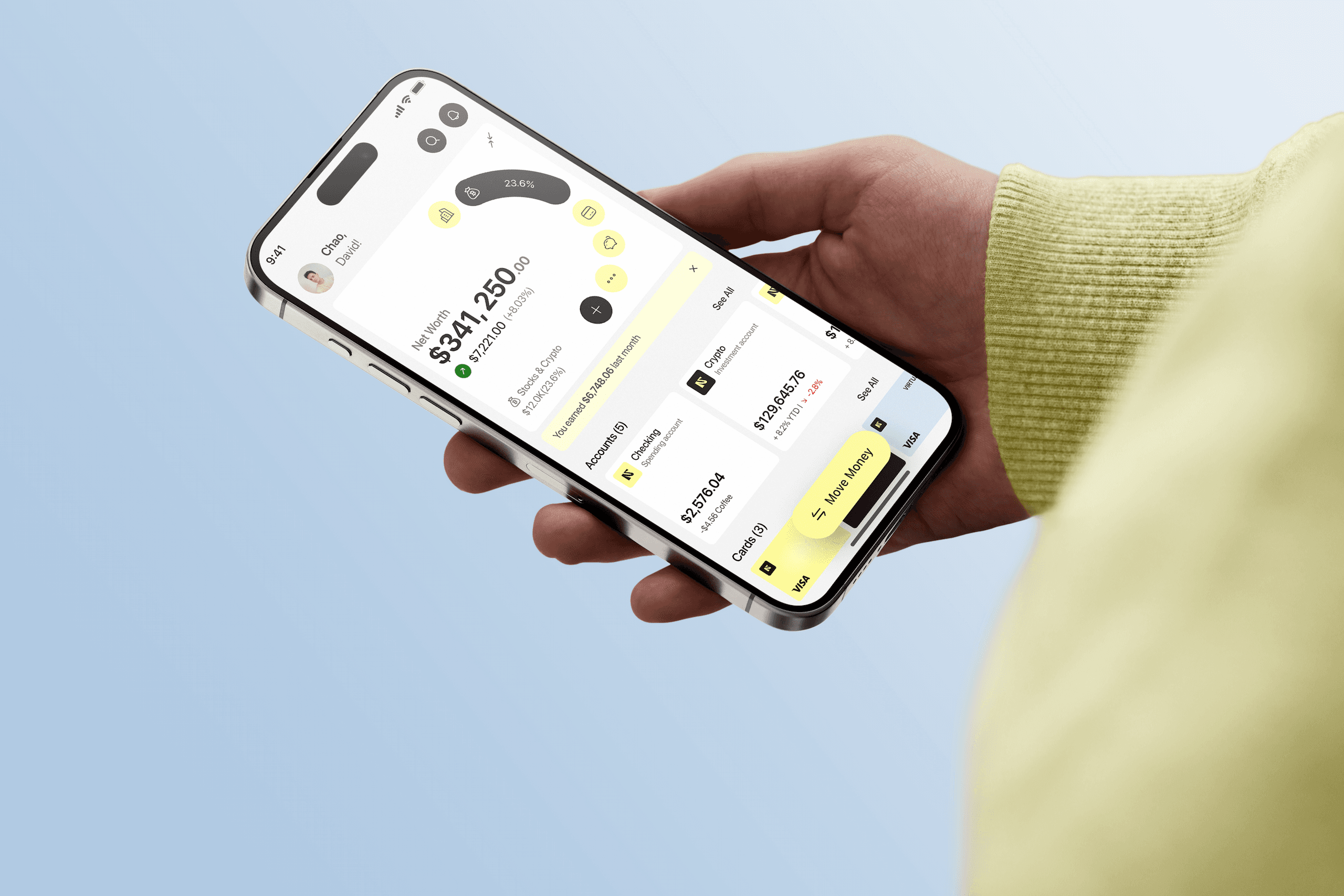
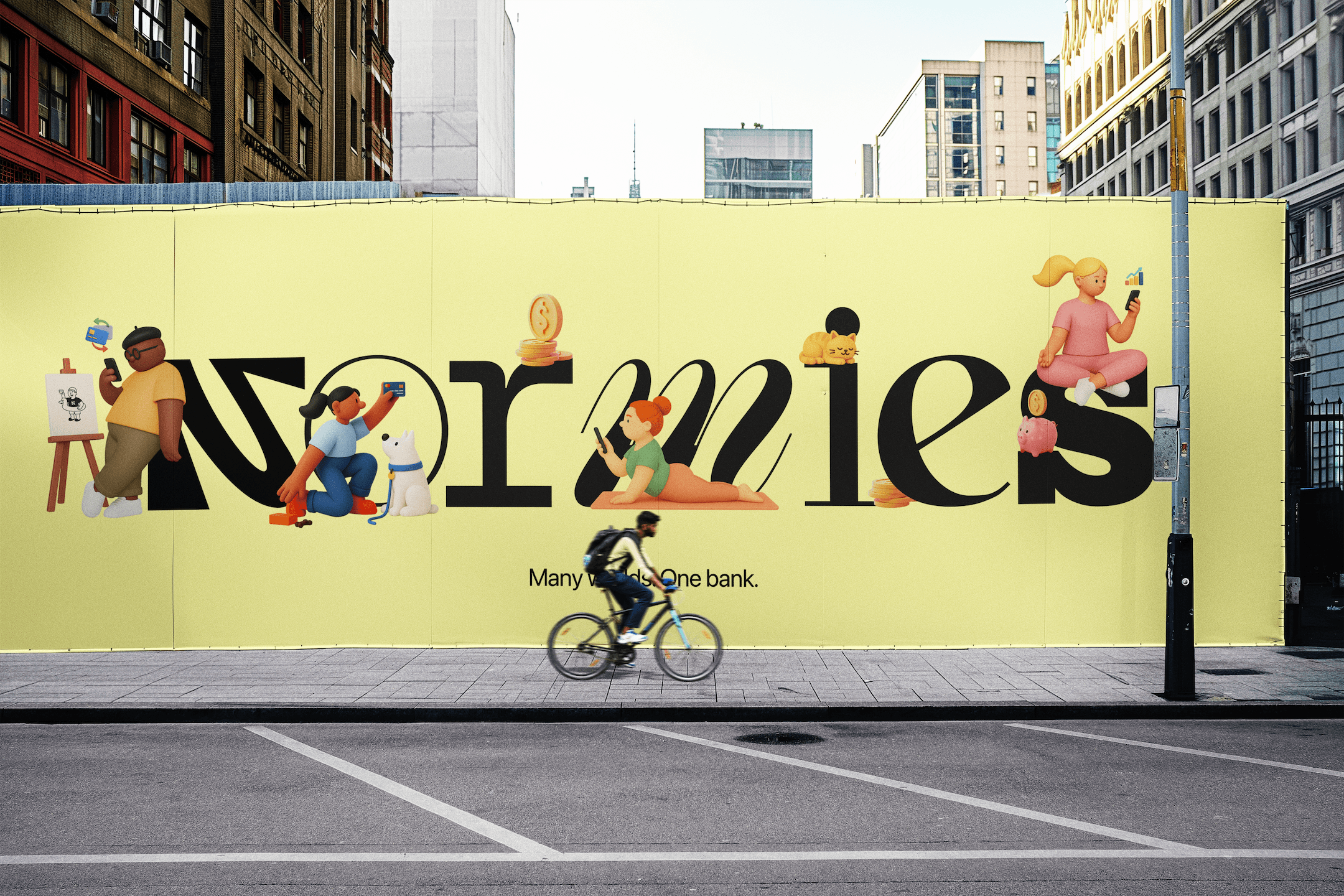
Normies is a personal finance product designed to help users manage money, assets, and investments within a single, coherent system.
The product combines:
daily money management (accounts, cards, transfers),
investments (stocks, crypto),
long-term assets (real estate),
financial automation (rules, recurring actions),
and shared financial interactions (group spending, splits).
The project started from zero.
There was no existing product, no fixed feature list, and no predefined UX model. Together with the client, we explored what the product should be, how it should work, and how complex financial functionality could be presented in a clear and trustworthy way.
From a business perspective, the project was critical because early architectural decisions would define:
scalability of the product,
cost of future feature expansion,
and overall UX quality in a highly sensitive domain.
My responsibility covered the entire UX/UI process, from early discovery through wireframes to high-fidelity UI and system-level decisions.
Normies is a personal finance product designed to help users manage money, assets, and investments within a single, coherent system.
The product combines:
daily money management (accounts, cards, transfers),
investments (stocks, crypto),
long-term assets (real estate),
financial automation (rules, recurring actions),
and shared financial interactions (group spending, splits).
The project started from zero.
There was no existing product, no fixed feature list, and no predefined UX model. Together with the client, we explored what the product should be, how it should work, and how complex financial functionality could be presented in a clear and trustworthy way.
From a business perspective, the project was critical because early architectural decisions would define:
scalability of the product,
cost of future feature expansion,
and overall UX quality in a highly sensitive domain.
My responsibility covered the entire UX/UI process, from early discovery through wireframes to high-fidelity UI and system-level decisions.

Discovery/Research
This project did not include a traditional, standalone research phase.
Discovery happened through competitive analysis and design (using wireframes) as the primary tools.
The goal was not validation of a fixed idea, but understanding how a complex financial system should be structured from scratch.
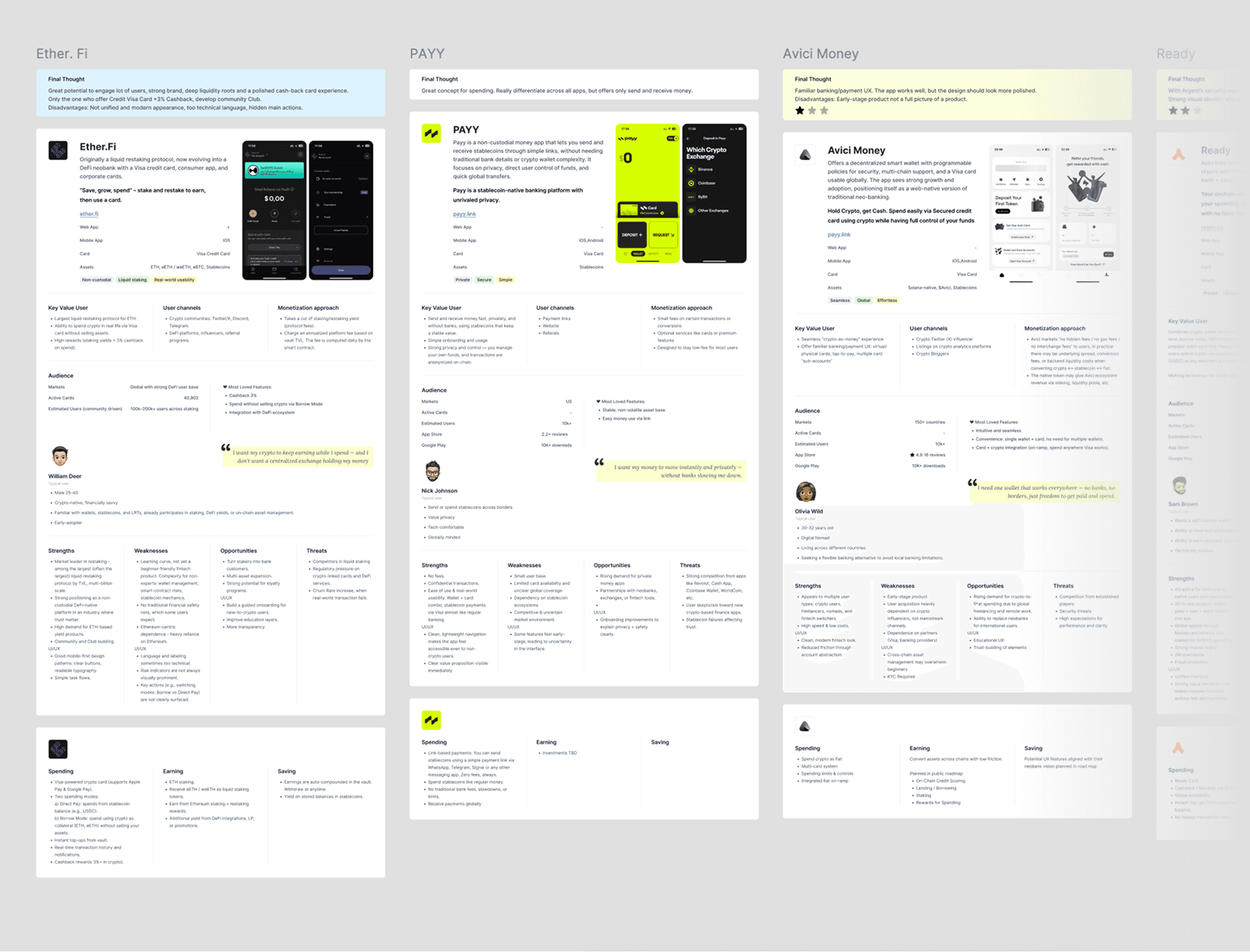
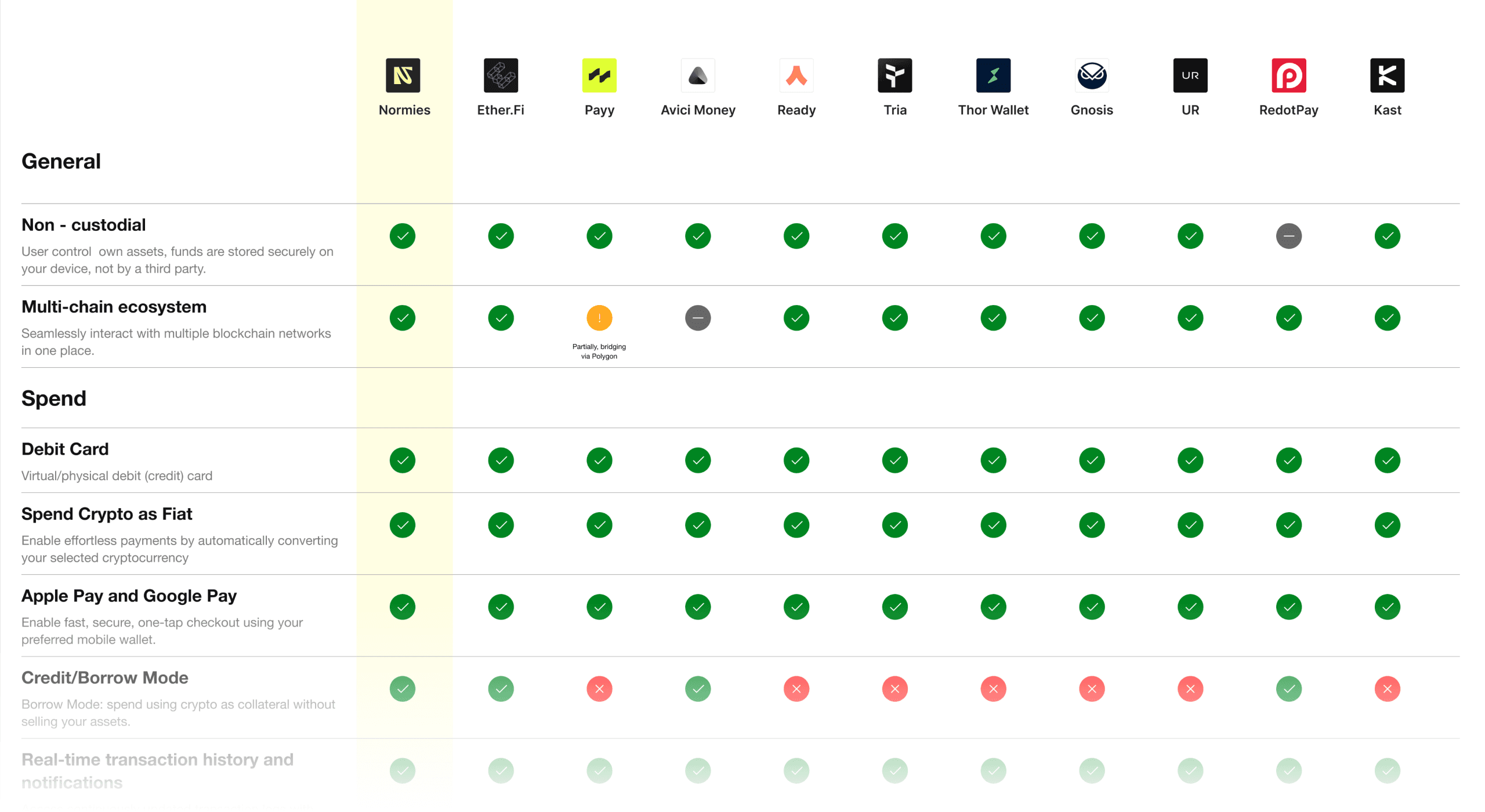
Competitive analysis
A large-scale competitive analysis was a key part of discovery.
The analysis focused on:
structure and navigation patterns,
information hierarchy,
money movement flows,
investment interactions,
permission and access handling.
Rather than copying competitors, the goal was to understand:
which patterns scale well,
which break as products grow,
and where users typically lose confidence.
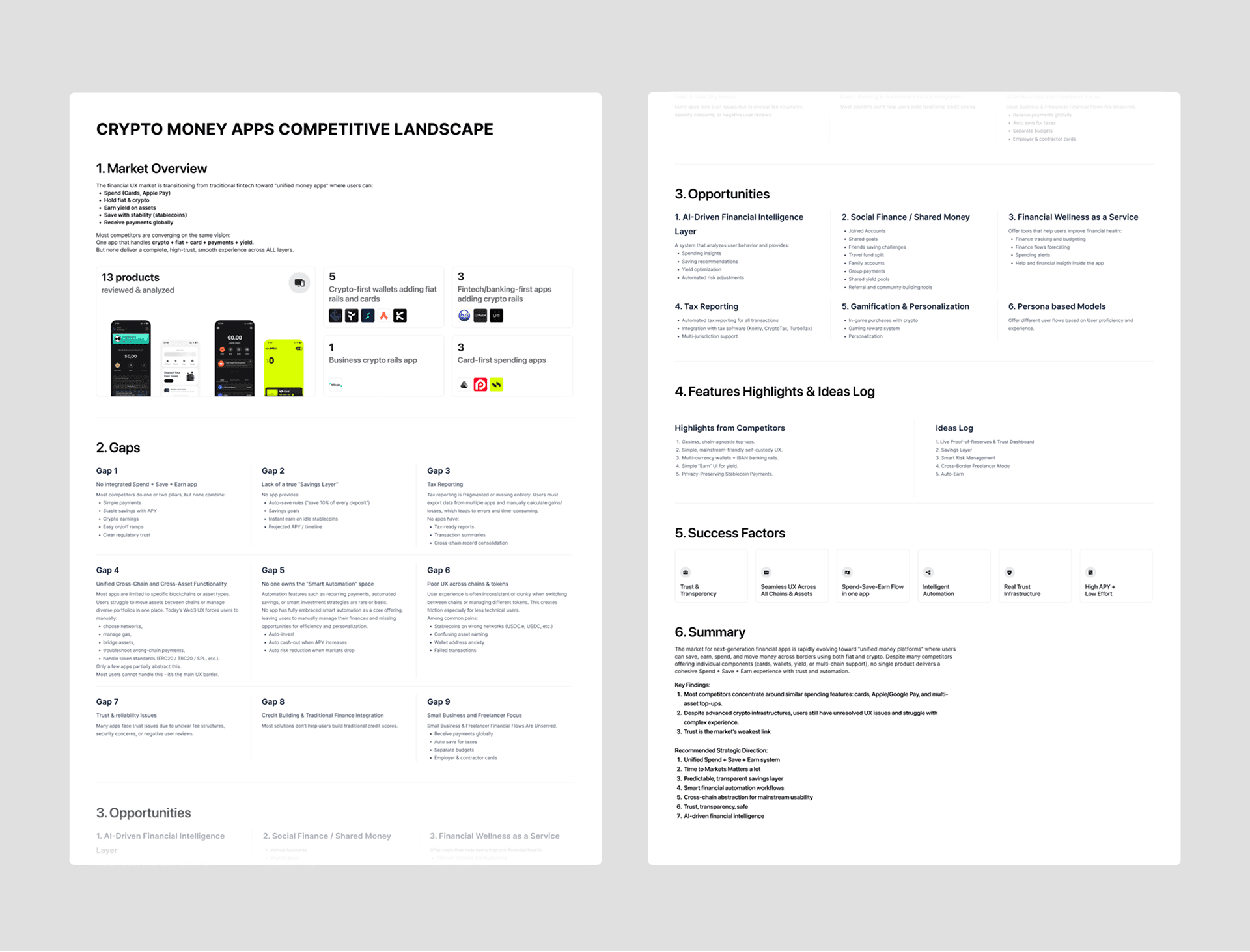
Key insights
Many finance apps become inconsistent as features expand.
Overloaded dashboards increase stress instead of clarity.
Predictable patterns build trust better than “clever” interactions.
System-level consistency matters more than feature-level optimization.
These insights reinforced a system-first design approach.
Discovery/Research
This project did not include a traditional, standalone research phase.
Discovery happened through competitive analysis and design (using wireframes) as the primary tools.
The goal was not validation of a fixed idea, but understanding how a complex financial system should be structured from scratch.
Competitive analysis
A large-scale competitive analysis was a key part of discovery.
The analysis focused on:
structure and navigation patterns,
information hierarchy,
money movement flows,
investment interactions,
permission and access handling.
Rather than copying competitors, the goal was to understand:
which patterns scale well,
which break as products grow,
and where users typically lose confidence.
Key insights
Many finance apps become inconsistent as features expand.
Overloaded dashboards increase stress instead of clarity.
Predictable patterns build trust better than “clever” interactions.
System-level consistency matters more than feature-level optimization.
These insights reinforced a system-first design approach.
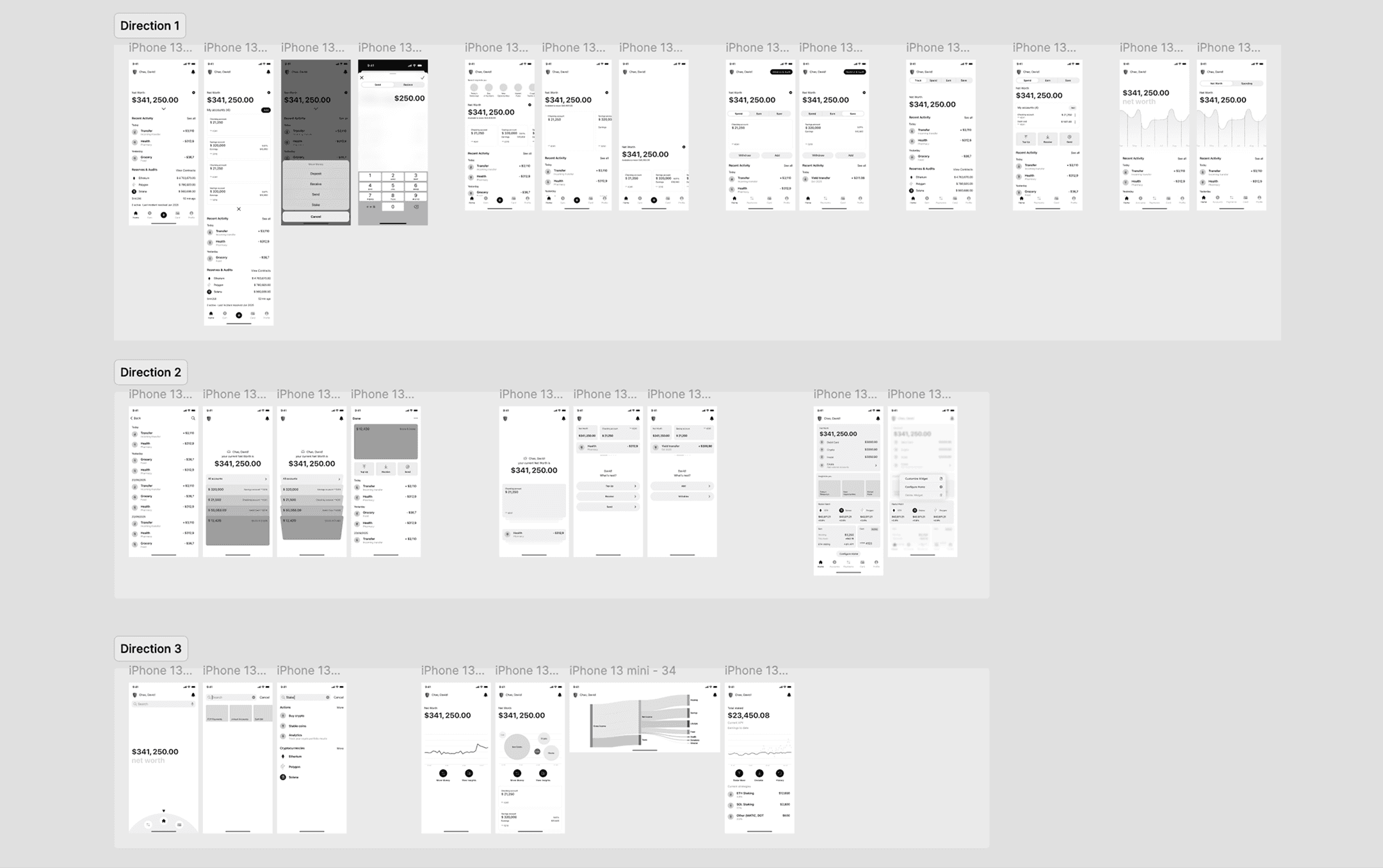
Phase 1: V1 → V2
Wireframes as a discovery tool
Wireframes were used as a thinking and alignment mechanism, not just as a visual step.
Through wireframes, we explored:
how financial domains should be separated,
which data must be visible by default,
where actions should live relative to information,
how users move between overview and details.
Wireframes helped:
test multiple structural hypotheses quickly,
surface inconsistencies early,
align the client and team around concrete solutions.
Instead of abstract discussions, decisions were made around real flows and layouts.
Phase 1: V1 → V2
Wireframes as a discovery tool
Wireframes were used as a thinking and alignment mechanism, not just as a visual step.
Through wireframes, we explored:
how financial domains should be separated,
which data must be visible by default,
where actions should live relative to information,
how users move between overview and details.
Wireframes helped:
test multiple structural hypotheses quickly,
surface inconsistencies early,
align the client and team around concrete solutions.
Instead of abstract discussions, decisions were made around real flows and layouts.
Core flows
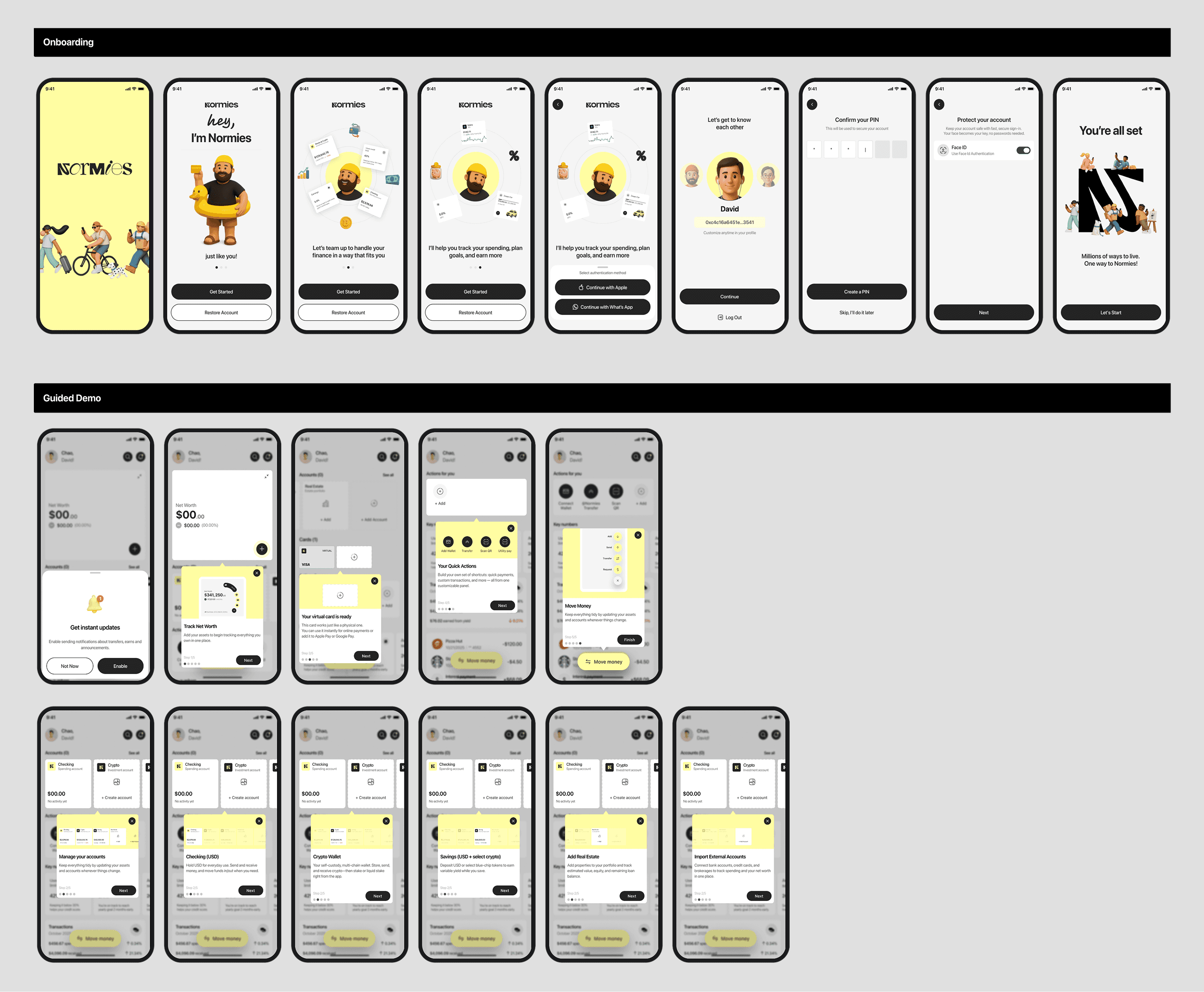
Onboarding
What the flow covers:
A lightweight onboarding sequence introducing the product and setting the first context.
The UI is clean and minimal, designed to get the user into the app quickly rather than trap them in setup.
Core flows
Onboarding
What the flow covers:
A lightweight onboarding sequence introducing the product and setting the first context.
The UI is clean and minimal, designed to get the user into the app quickly rather than trap them in setup.
Core flows
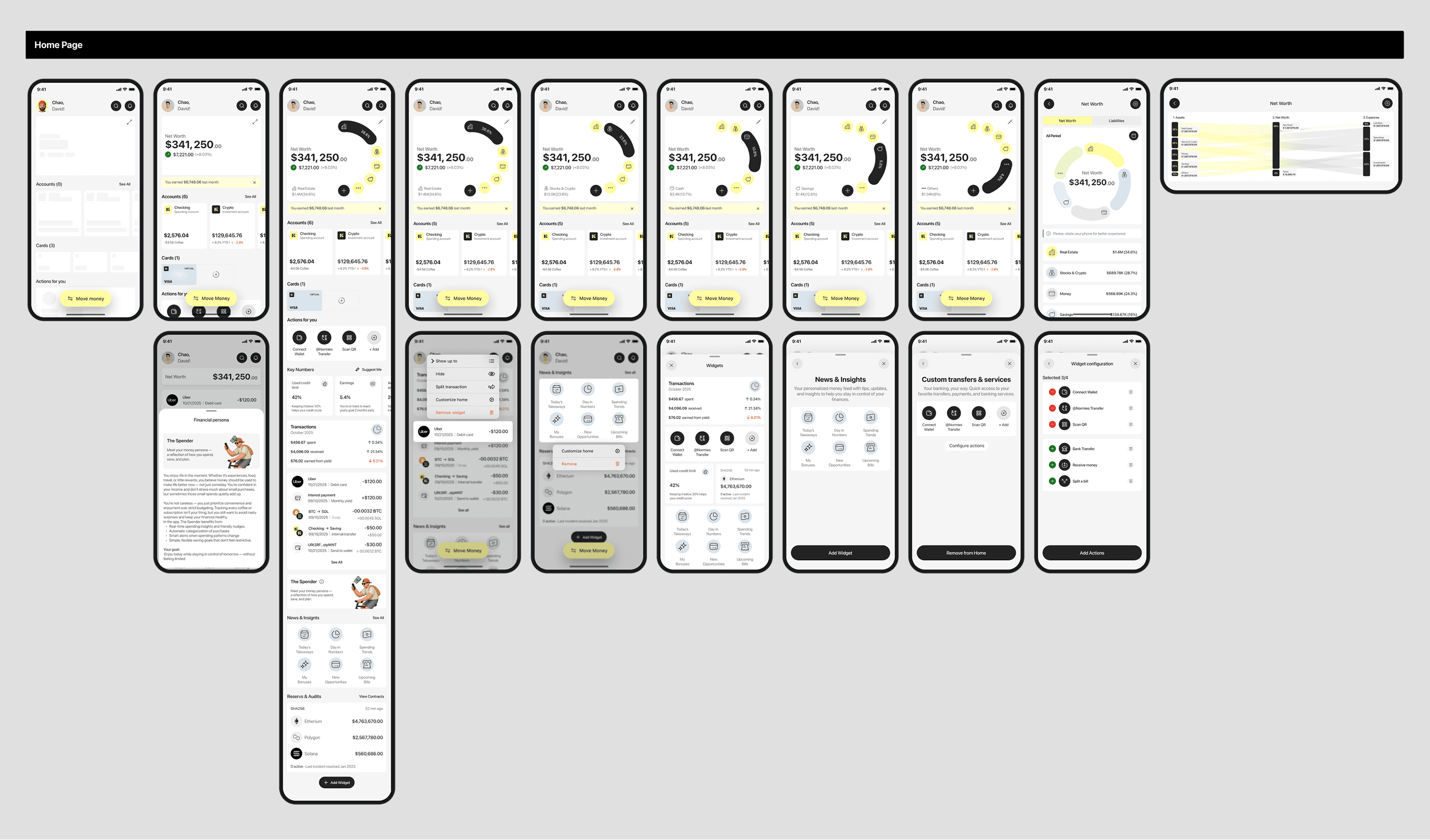
Home Page
Home acts as the financial anchor of the product.
Its primary function is to provide an immediate answer to “Where do I stand financially?”
The screen combines net worth visibility, account and card summaries, and access to core actions. It is intentionally stable and not overloaded with features, serving as both an entry point and a return point for all major flows.
Core flows
Home Page
Home acts as the financial anchor of the product.
Its primary function is to provide an immediate answer to “Where do I stand financially?”
The screen combines net worth visibility, account and card summaries, and access to core actions. It is intentionally stable and not overloaded with features, serving as both an entry point and a return point for all major flows.
Core flows
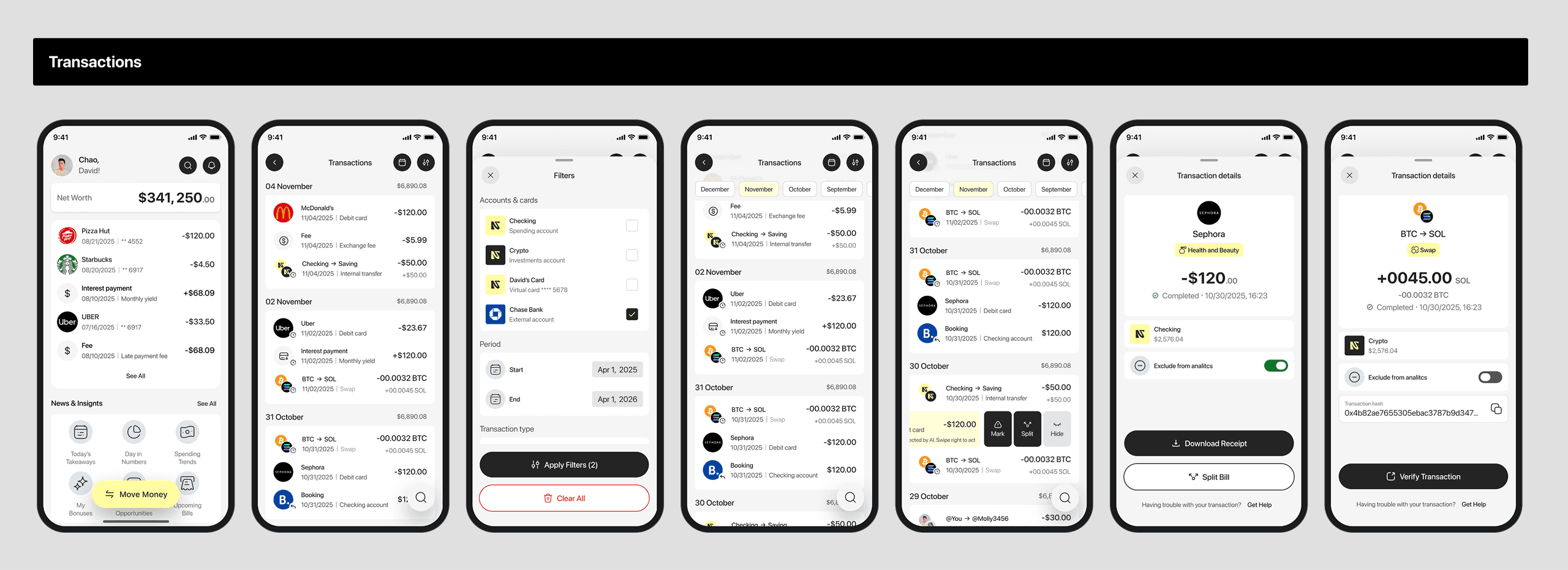
Transactions
Transactions are designed as an active operational layer, not just a history list.
The flow supports:
fast scanning of activity,
detailed inspection of individual transactions,
and contextual follow-up actions.
Core flows
Transactions
Transactions are designed as an active operational layer, not just a history list.
The flow supports:
fast scanning of activity,
detailed inspection of individual transactions,
and contextual follow-up actions.
Core flows
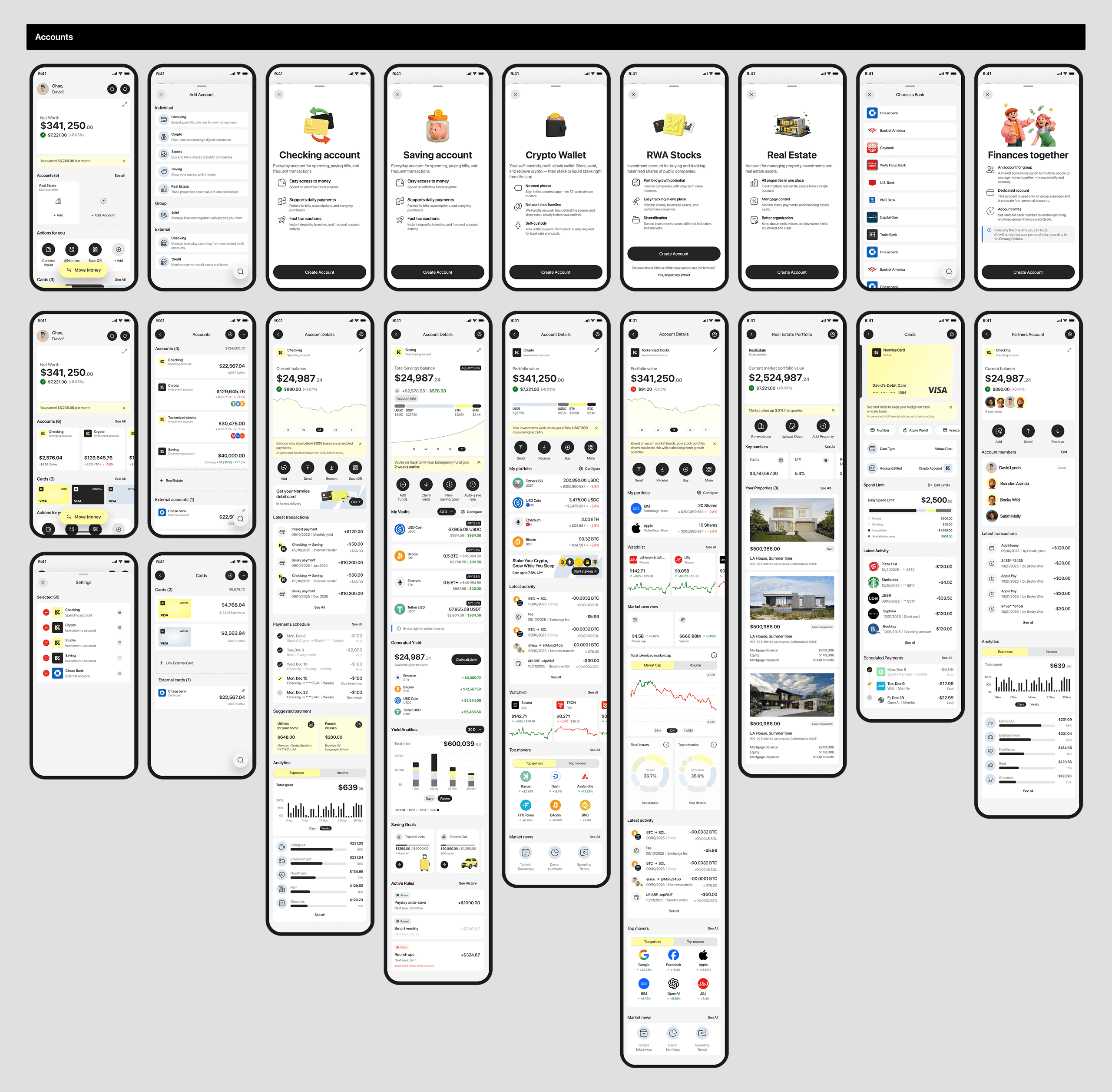
Accounts
The Accounts flow provides transparency and control across different account types.
Internal, external, and read-only accounts are handled explicitly. Limitations are clearly communicated rather than hidden, preventing false expectations and supporting trust.
The experience prioritizes clarity of access and permissions over visual uniformity.
Core flows
Accounts
The Accounts flow provides transparency and control across different account types.
Internal, external, and read-only accounts are handled explicitly. Limitations are clearly communicated rather than hidden, preventing false expectations and supporting trust.
The experience prioritizes clarity of access and permissions over visual uniformity.
Core flows
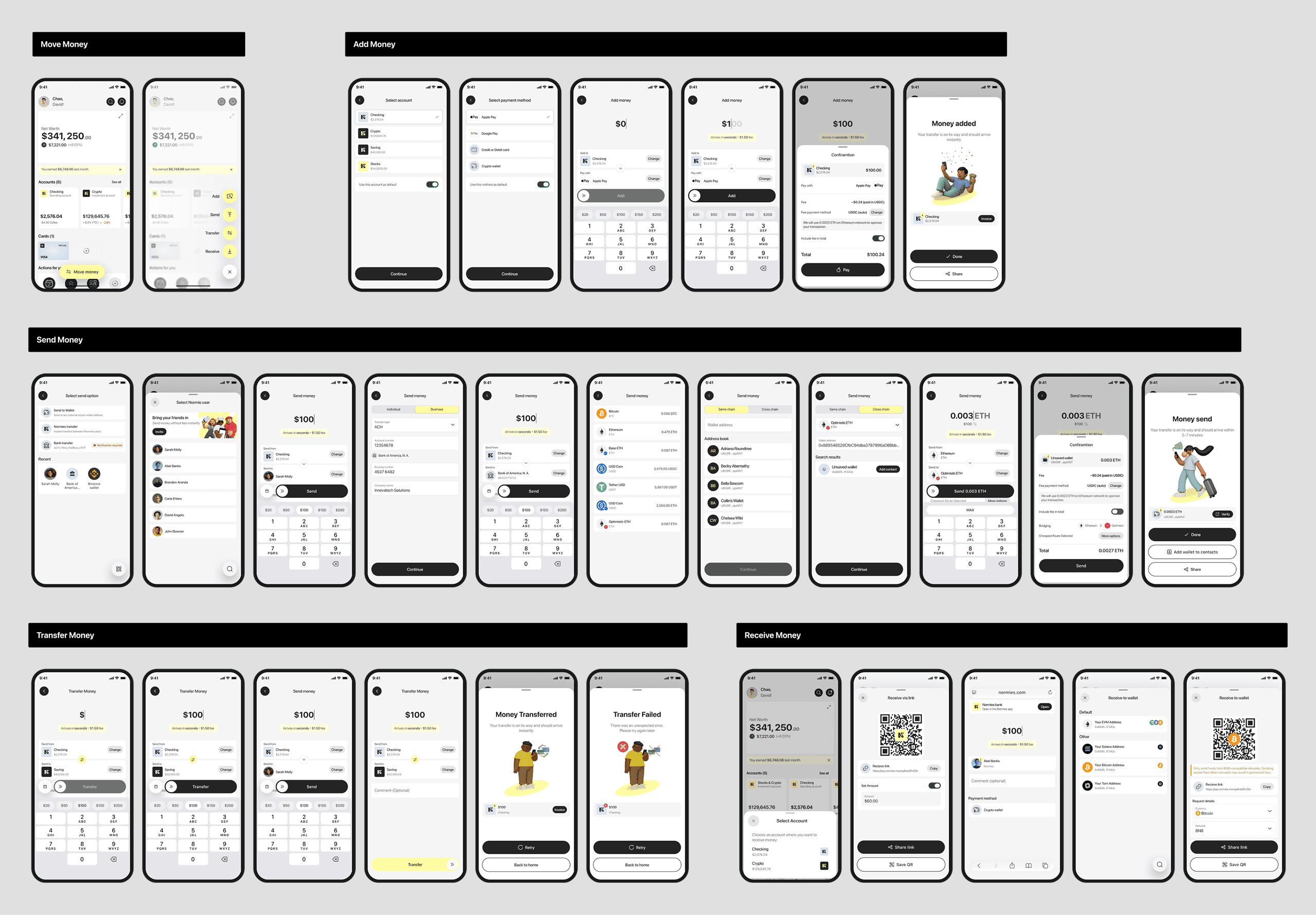
Move Money
Move Money is a centralized entry point for all money-related actions.
Instead of distributing actions across the product, sending, receiving, adding funds, and internal transfers follow a single interaction model. Each path branches based on intent and constraints, but all share the same structure:
amount → method → confirmation → status
This standardization reduces cognitive load and increases confidence when performing sensitive financial actions.
Core flows
Move Money
Move Money is a centralized entry point for all money-related actions.
Instead of distributing actions across the product, sending, receiving, adding funds, and internal transfers follow a single interaction model. Each path branches based on intent and constraints, but all share the same structure:
amount → method → confirmation → status
This standardization reduces cognitive load and increases confidence when performing sensitive financial actions.
Core flows
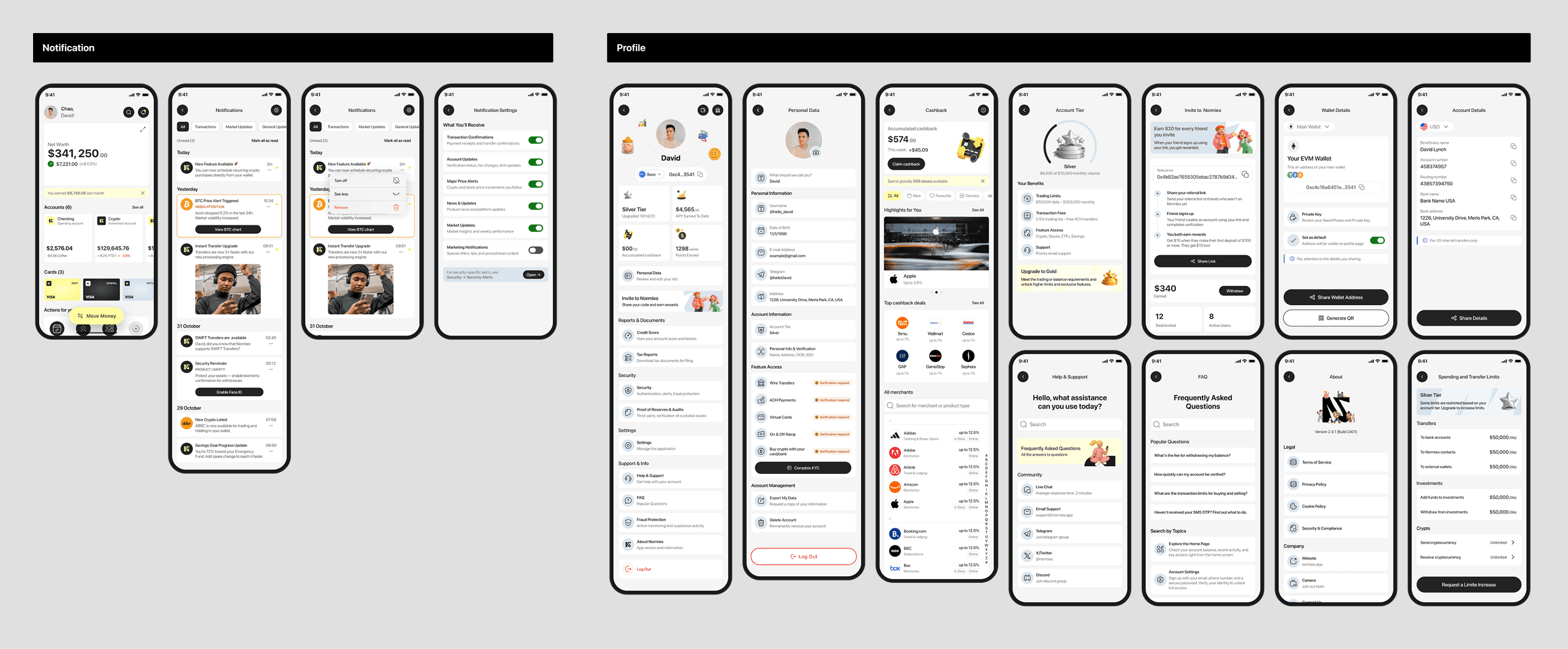
Profile & Notifications
Profile functions as a control center, not a passive settings screen.
It centralizes personal preferences, security-related options, and notification management. Notifications are treated as a core UX component, designed to inform without creating noise.
Core flows
Profile & Notifications
Profile functions as a control center, not a passive settings screen.
It centralizes personal preferences, security-related options, and notification management. Notifications are treated as a core UX component, designed to inform without creating noise.
Core flows
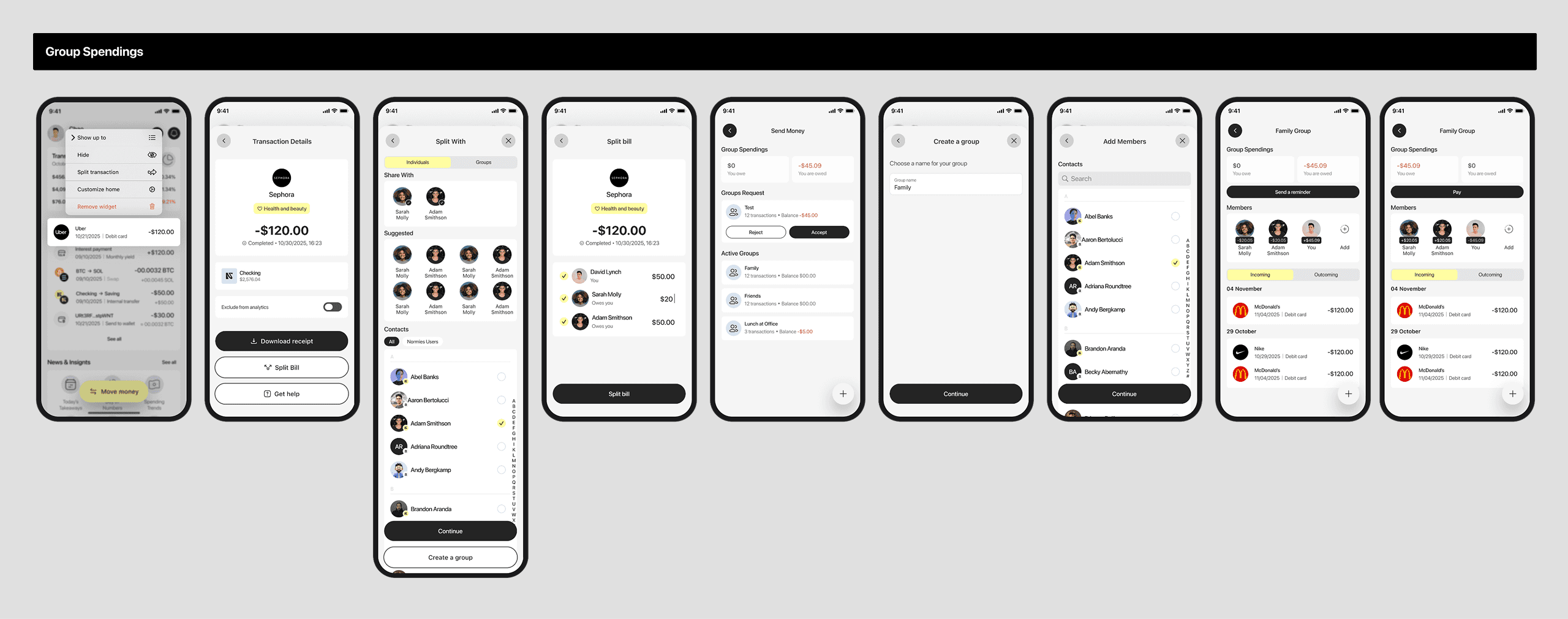
Group Spendings
Group Spendings introduces a social financial layer.
The flow supports shared expenses, splitting transactions, and balance tracking between participants. It is designed as a separate domain to avoid overloading core transaction flows, while remaining integrated into the overall financial system.
The focus is on clarity, accountability, and simplicity for recurring shared use.
Core flows
Group Spendings
Group Spendings introduces a social financial layer.
The flow supports shared expenses, splitting transactions, and balance tracking between participants. It is designed as a separate domain to avoid overloading core transaction flows, while remaining integrated into the overall financial system.
The focus is on clarity, accountability, and simplicity for recurring shared use.
Results, impact
The project is currently in the handoff phase; full implementation is still in progress.
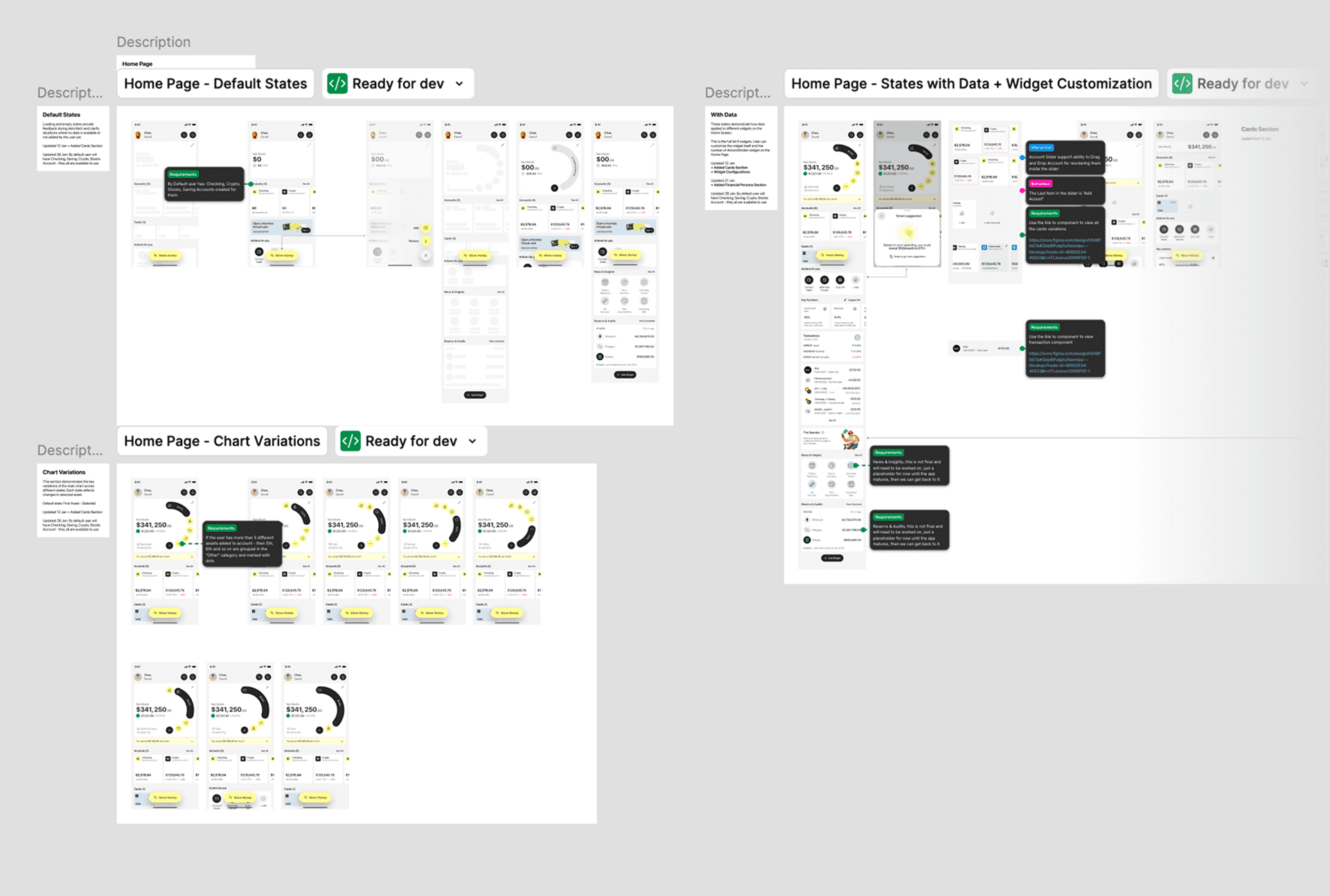
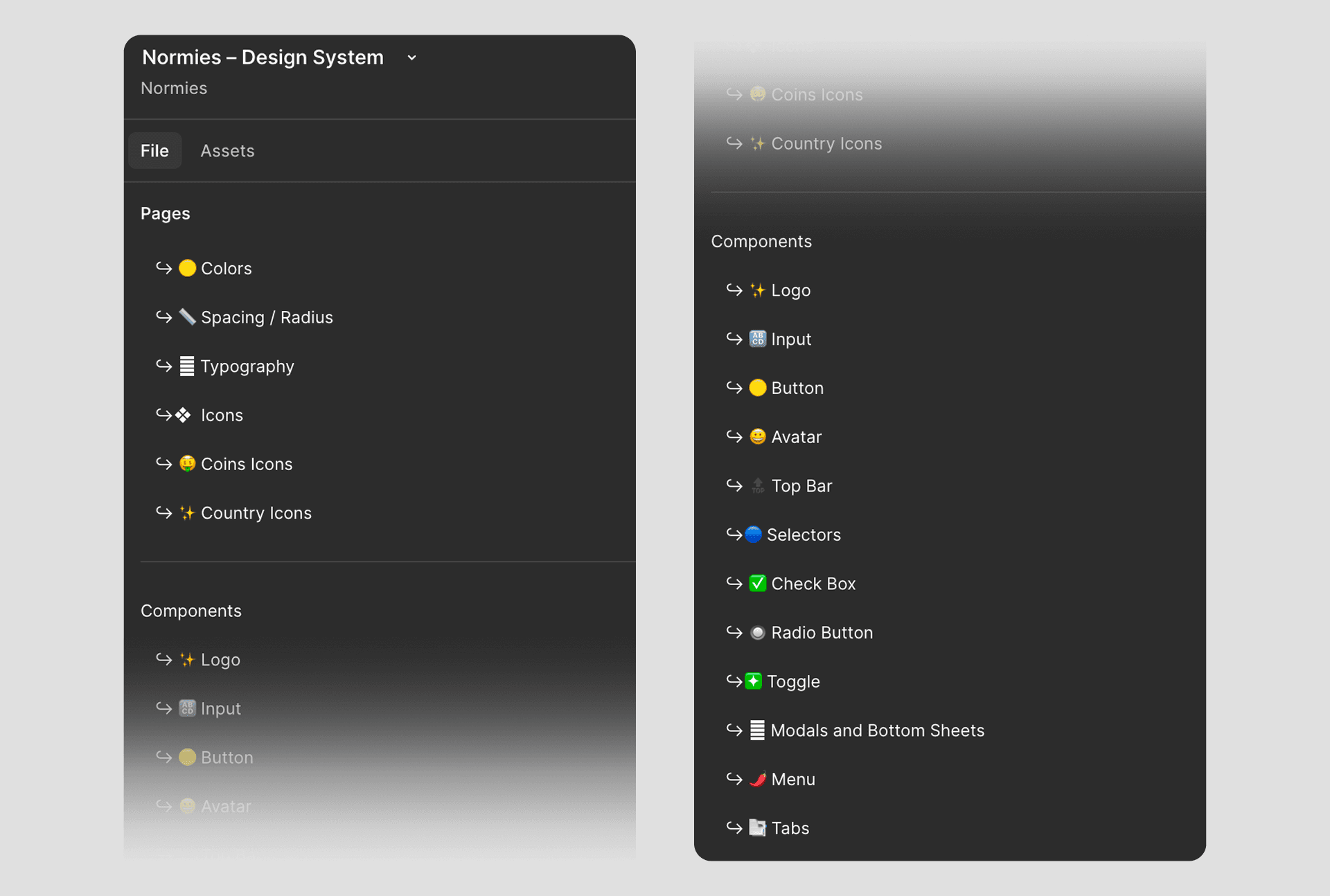
Designs were prepared with clear structure, explicit states, and predictable behavior, especially for critical financial actions. Attention was given to permission handling, account types, and action constraints to minimize ambiguity during development.
Ongoing collaboration with the development team supports alignment between design intent and technical constraints.
Results, impact
The project is currently in the handoff phase; full implementation is still in progress.
Designs were prepared with clear structure, explicit states, and predictable behavior, especially for critical financial actions. Attention was given to permission handling, account types, and action constraints to minimize ambiguity during development.
Ongoing collaboration with the development team supports alignment between design intent and technical constraints.
Results, impact
While the product has not yet launched and quantitative metrics are not available, the project delivered significant impact at the product-definition level.
The work resulted in:
a clearly defined vision for a personal finance product that combines multiple financial domains into a single coherent system;
a validated structure of core flows that can support future feature expansion without increasing cognitive load;
alignment between stakeholders around how the product should work, not just how it should look;
reduced ambiguity for development by translating abstract ideas into concrete, system-level UX decisions.
Results, impact
While the product has not yet launched and quantitative metrics are not available, the project delivered significant impact at the product-definition level.
The work resulted in:
a clearly defined vision for a personal finance product that combines multiple financial domains into a single coherent system;
a validated structure of core flows that can support future feature expansion without increasing cognitive load;
alignment between stakeholders around how the product should work, not just how it should look;
reduced ambiguity for development by translating abstract ideas into concrete, system-level UX decisions.
Other projects
web3
crypto
AI
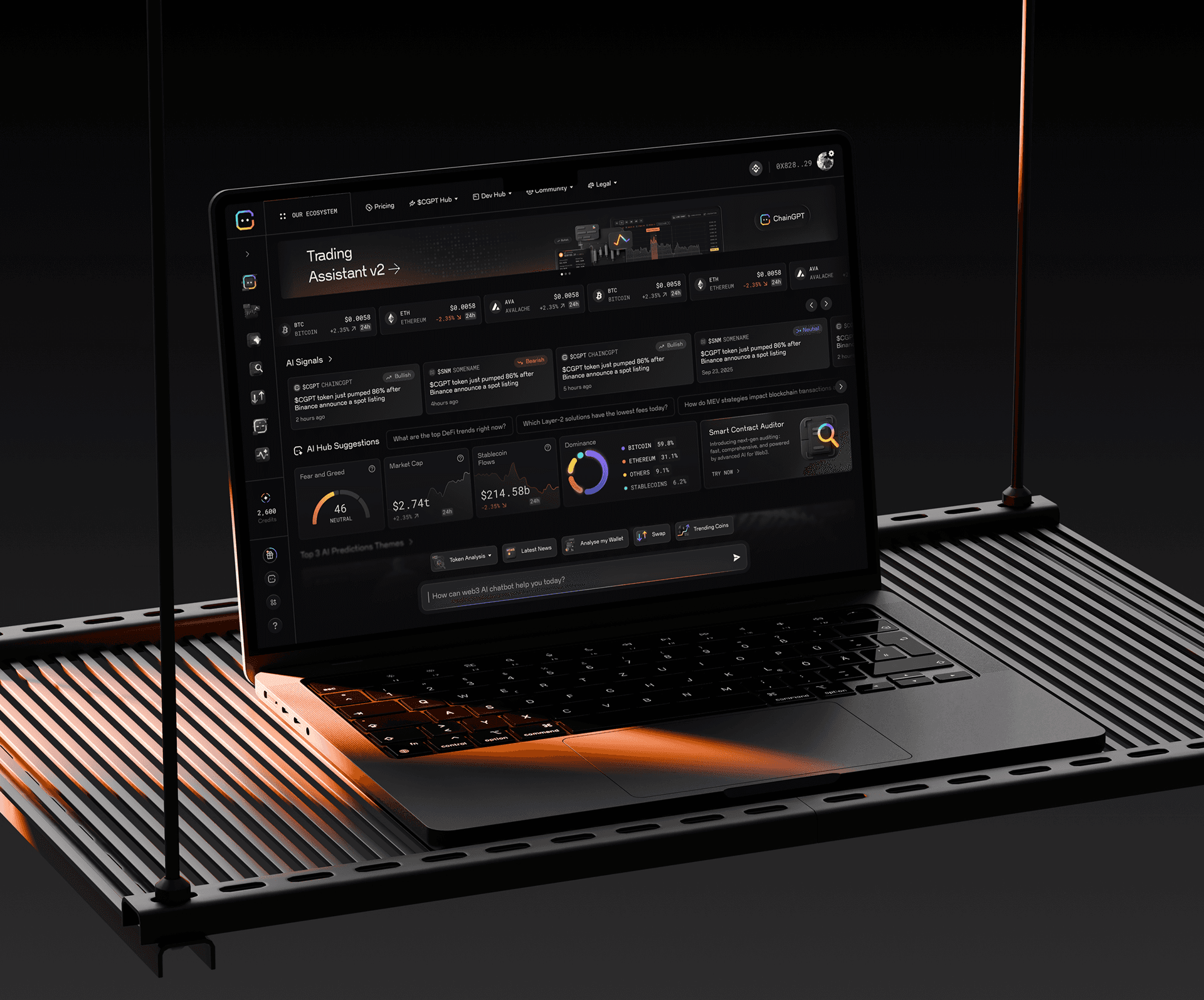
ChainGPT AI Hub
Chat-centered architecture enabling scalable AI tool growth and monetization evolution
web3
crypto
AI
ChainGPT AI Hub
Chat-centered architecture enabling scalable AI tool growth and monetization evolution
Motorsport
Broadcast
Dataviz
Griiip
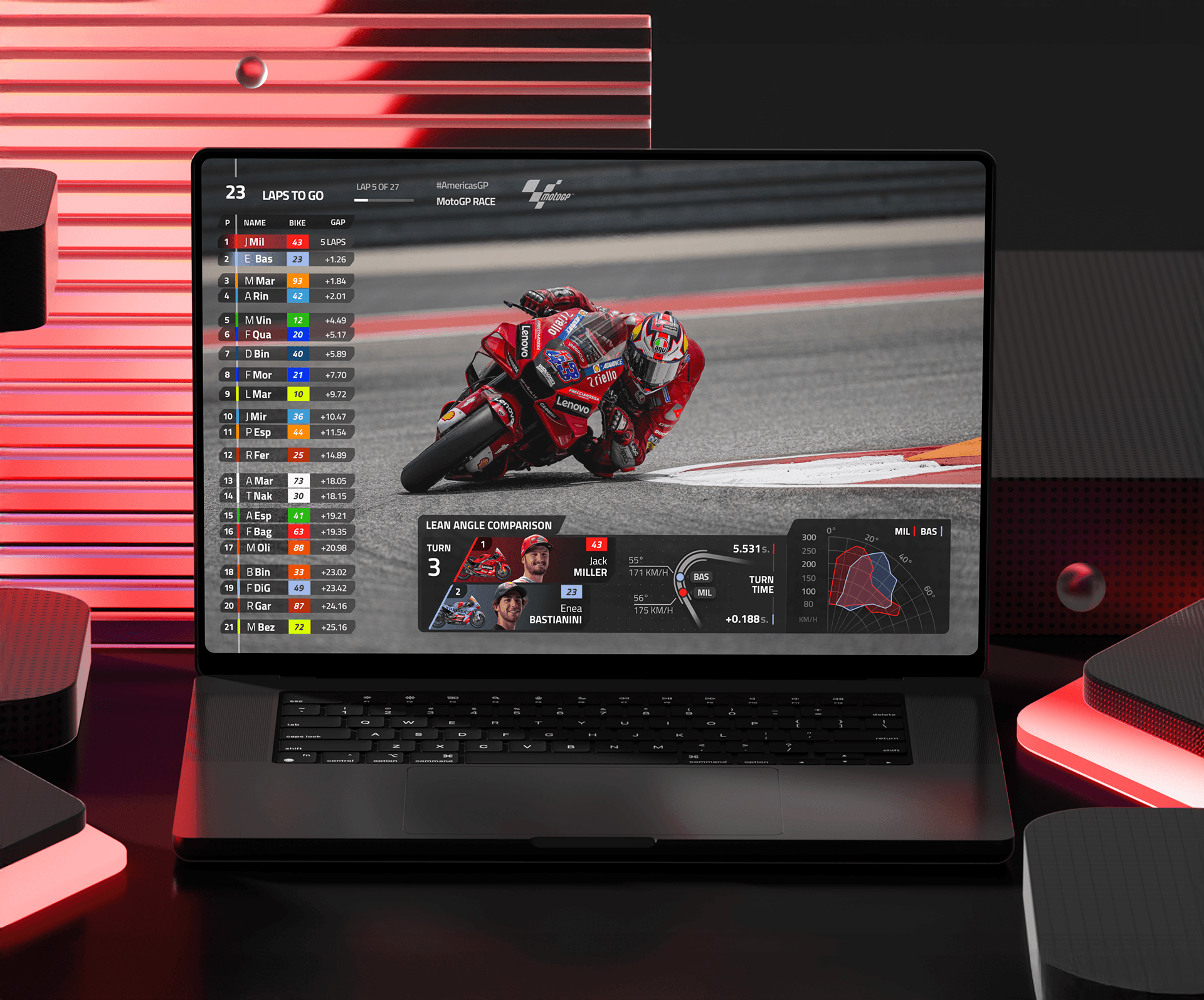
Second Screen web app, Race Graphics for TV, UI systems, presentations & videos
Motorsport
Broadcast
Dataviz
Griiip
Second Screen web app, Race Graphics for TV, UI systems, presentations & videos