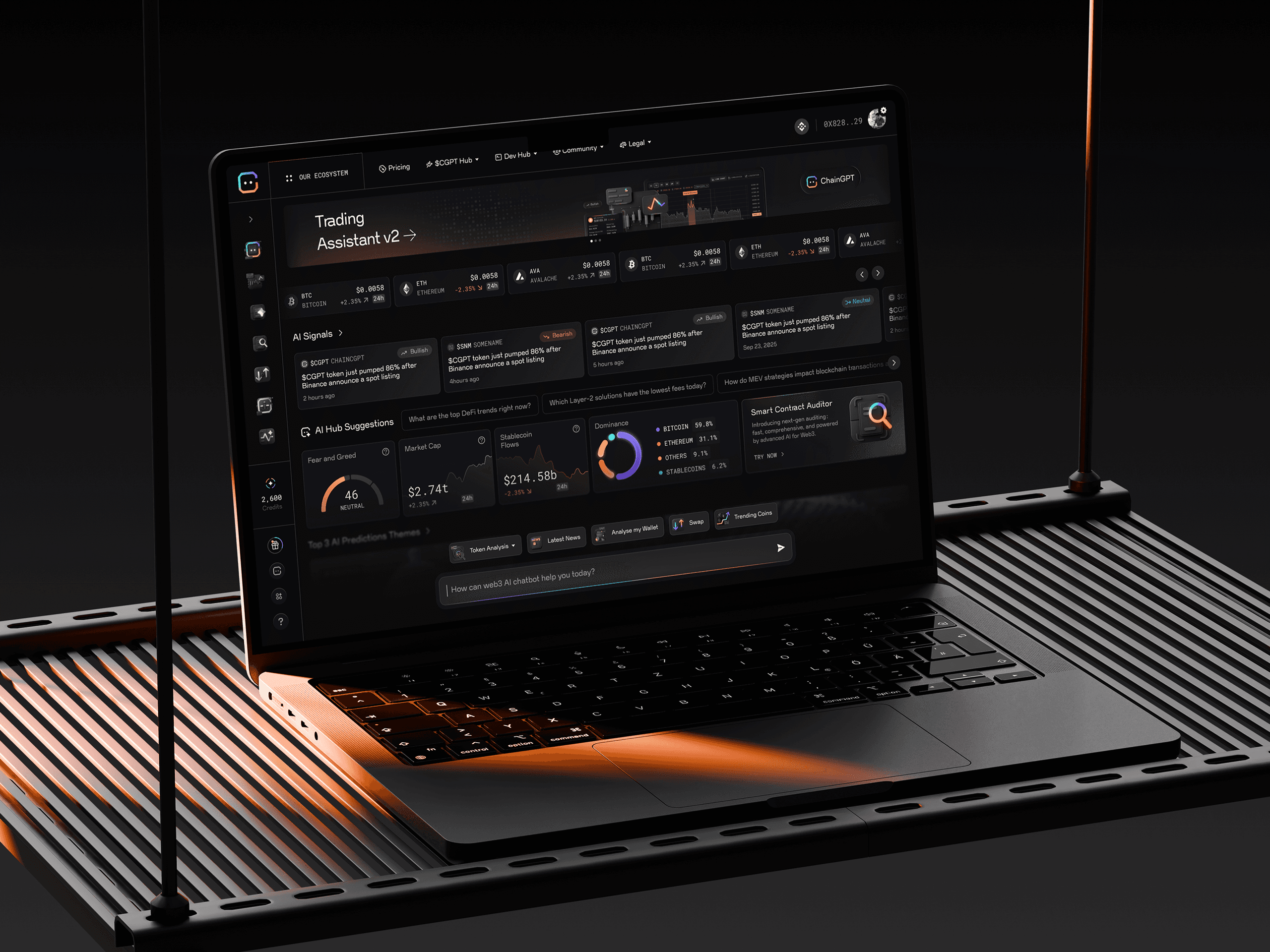
CGPT AI Hub is a Web3-focused AI platform that brings together multiple AI-powered tools into a single product ecosystem. The platform serves crypto traders, developers, researchers, and Web3 users who need fast access to market insights, trading assistance, smart contract tools, and blockchain-related analysis.
At the time I joined the project, the AI Hub was already live and actively expanding. New AI tools were being added continuously in response to business goals, community demand, and market opportunities. While each tool solved a valid user problem, the overall product experience was becoming increasingly complex.
From a business perspective, the AI Hub was a strategic product. It acted as a central access point to CGPT’s AI capabilities and played a key role in user retention, monetization, and ecosystem growth.
My responsibility went beyond individual screens or features. I worked on:
defining a scalable UX architecture
unifying interaction patterns across tools
resolving accumulated UX and UI inconsistencies
balancing user needs, business goals, and technical constraints
shaping the product’s long-term evolution
CGPT AI Hub is a Web3-focused AI platform that brings together multiple AI-powered tools into a single product ecosystem. The platform serves crypto traders, developers, researchers, and Web3 users who need fast access to market insights, trading assistance, smart contract tools, and blockchain-related analysis.
At the time I joined the project, the AI Hub was already live and actively expanding. New AI tools were being added continuously in response to business goals, community demand, and market opportunities. While each tool solved a valid user problem, the overall product experience was becoming increasingly complex.
From a business perspective, the AI Hub was a strategic product. It acted as a central access point to CGPT’s AI capabilities and played a key role in user retention, monetization, and ecosystem growth.
My responsibility went beyond individual screens or features. I worked on:
defining a scalable UX architecture
unifying interaction patterns across tools
resolving accumulated UX and UI inconsistencies
balancing user needs, business goals, and technical constraints
shaping the product’s long-term evolution

Phase 1: V1 → V2
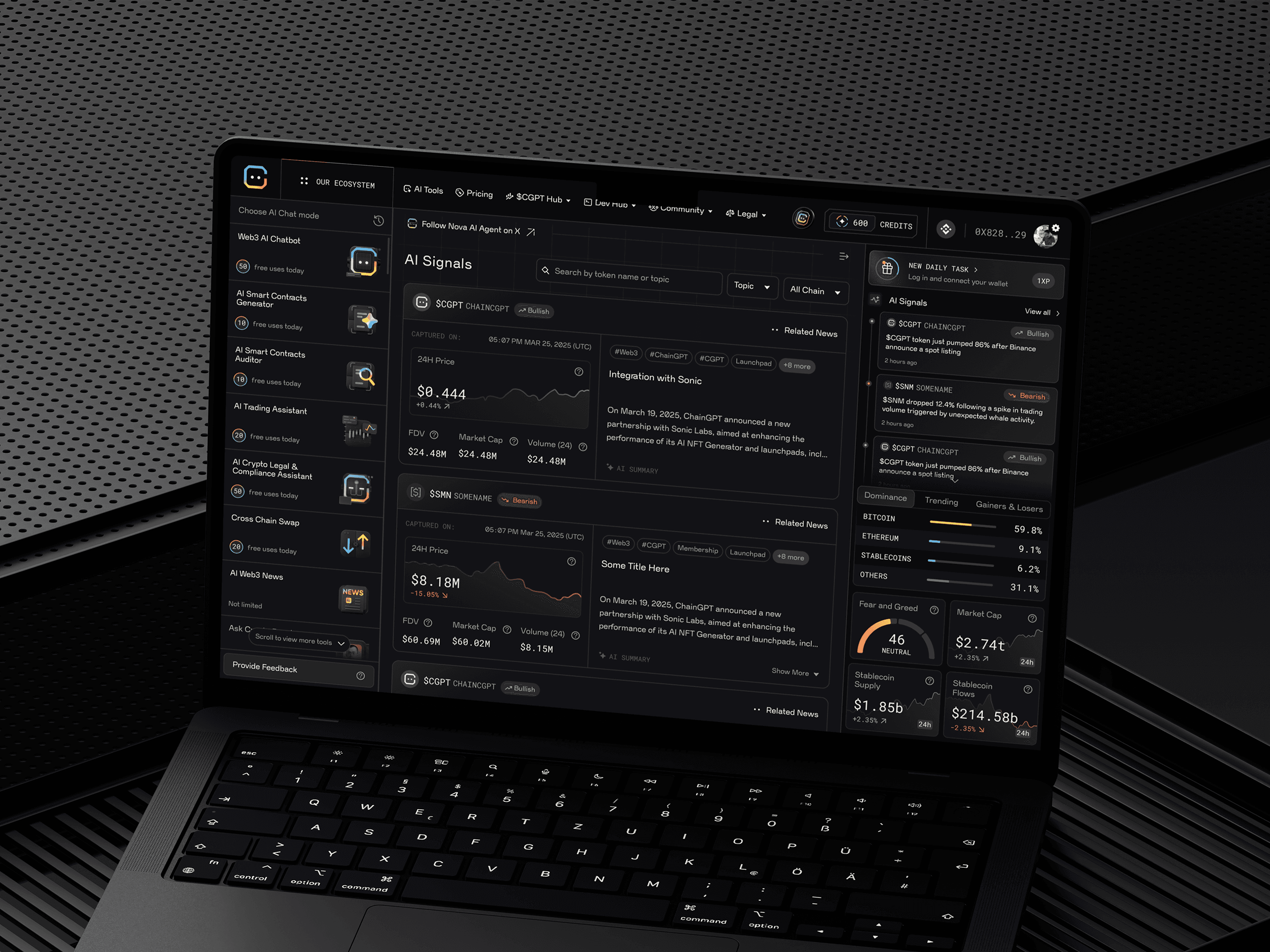
The goal of V2 was to move away from a tool-centric interface and rebuild AI Hub around AI as the primary interaction layer. Instead of forcing users to understand product structure upfront, the experience shifted to an intent-first flow: users start with a question, and the system adapts around it.
Chat as the core of the product
In V2, chat was promoted from a secondary overlay to the main workspace of the product.
This change solved several problems at once:
shortened the path from intent → result
removed competition between UI blocks and AI interaction
reduced the number of entry points users had to choose from
Chat became the place where most meaningful interactions start and evolve, while the rest of the interface was redesigned to support this core flow.
Clear hierarchy instead of feature sprawl
To make the system scalable, the interface was reorganized into a stable hierarchy:
Left: AI modes and tool entry points (what the user wants to do)
Center: active workspace (chat, landing state, long-running tasks)
Right: supporting intelligence (market context, signals, indicators)
As a result, new tools could be added without introducing new navigation patterns or breaking user expectations.
Phase 1: V1 → V2
The goal of V2 was to move away from a tool-centric interface and rebuild AI Hub around AI as the primary interaction layer. Instead of forcing users to understand product structure upfront, the experience shifted to an intent-first flow: users start with a question, and the system adapts around it.
Chat as the core of the product
In V2, chat was promoted from a secondary overlay to the main workspace of the product.
This change solved several problems at once:
shortened the path from intent → result
removed competition between UI blocks and AI interaction
reduced the number of entry points users had to choose from
Chat became the place where most meaningful interactions start and evolve, while the rest of the interface was redesigned to support this core flow.
Clear hierarchy instead of feature sprawl
To make the system scalable, the interface was reorganized into a stable hierarchy:
Left: AI modes and tool entry points (what the user wants to do)
Center: active workspace (chat, landing state, long-running tasks)
Right: supporting intelligence (market context, signals, indicators)
As a result, new tools could be added without introducing new navigation patterns or breaking user expectations.
Phase 1: V1 → V2
Introducing AI Signals
In V2 AI Signals and market data were intentionally positioned as supporting intelligence in the right panel.
At this stage, their role was to:
provide context for decisions made in chat
keep users informed without pulling focus from the main workflow
This setup preserved a clear hierarchy and avoided overloading the core experience.
Phase 1: V1 → V2
Introducing AI Signals
In V2 AI Signals and market data were intentionally positioned as supporting intelligence in the right panel.
At this stage, their role was to:
provide context for decisions made in chat
keep users informed without pulling focus from the main workflow
This setup preserved a clear hierarchy and avoided overloading the core experience.
Phase 2: V2 → V2.2
Why V2 had to evolve
After V2, the product entered a new phase where UX, business model, and user behavior started to diverge from the original assumptions.
Three factors drove the transition to V2.2:
Monetization shift: the product was moving from per-tool usage toward a subscription-based model, making rigid tool boundaries less relevant
Usage patterns: some features (especially signals-related) were no longer passive context but active destinations
Complexity management: the growing set of capabilities required a clearer, more compact navigation model
Navigation changes in V2.2
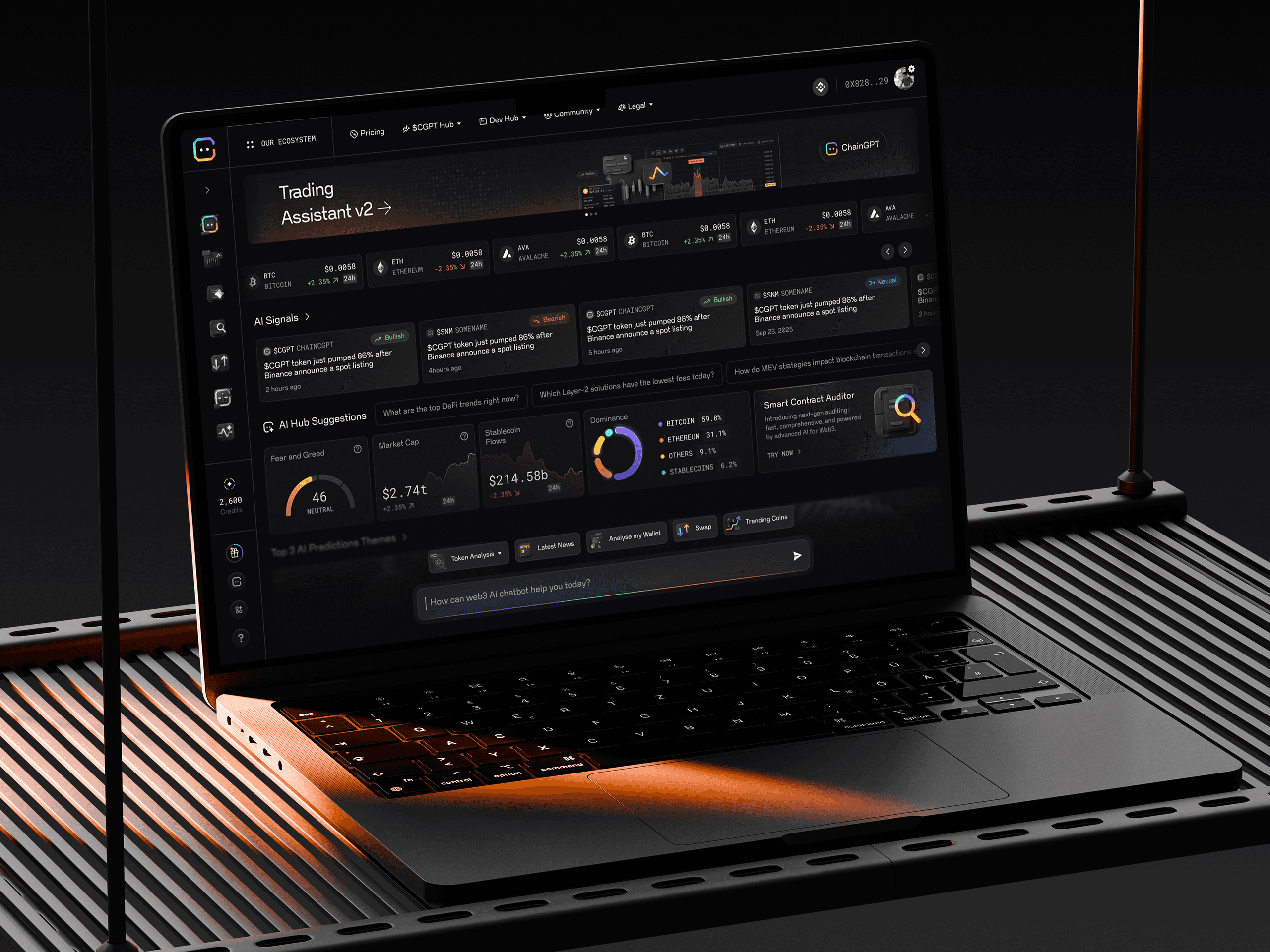
In V2.2, chat became the default entry point to the product, reinforcing AI as the core value.
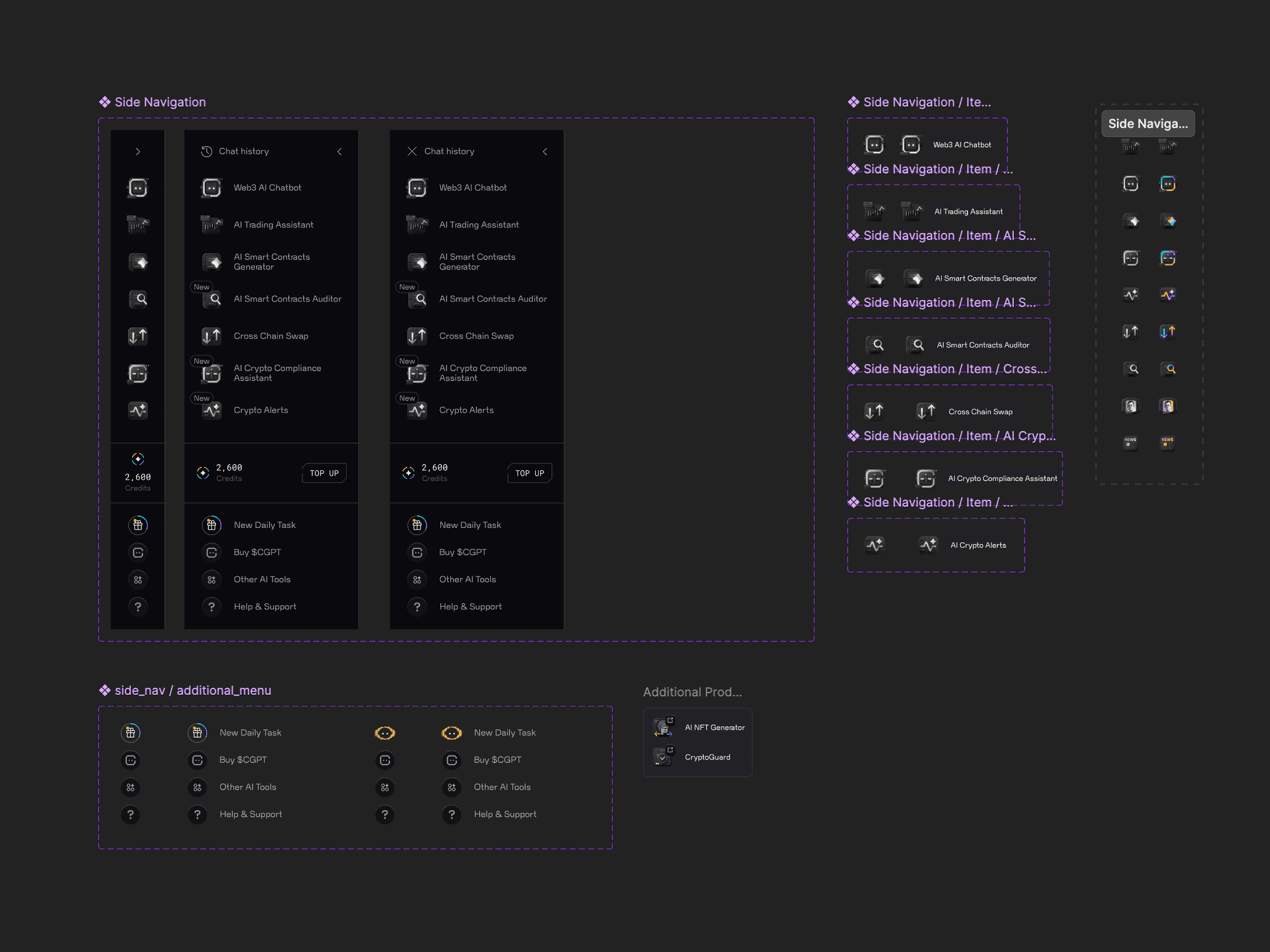
Navigation was simplified and made expandable:
reducing upfront choices
keeping advanced tools accessible without overwhelming new users
supporting continuous usage instead of single, transactional actions
This aligned the interface with both the new monetization logic and real user behavior.
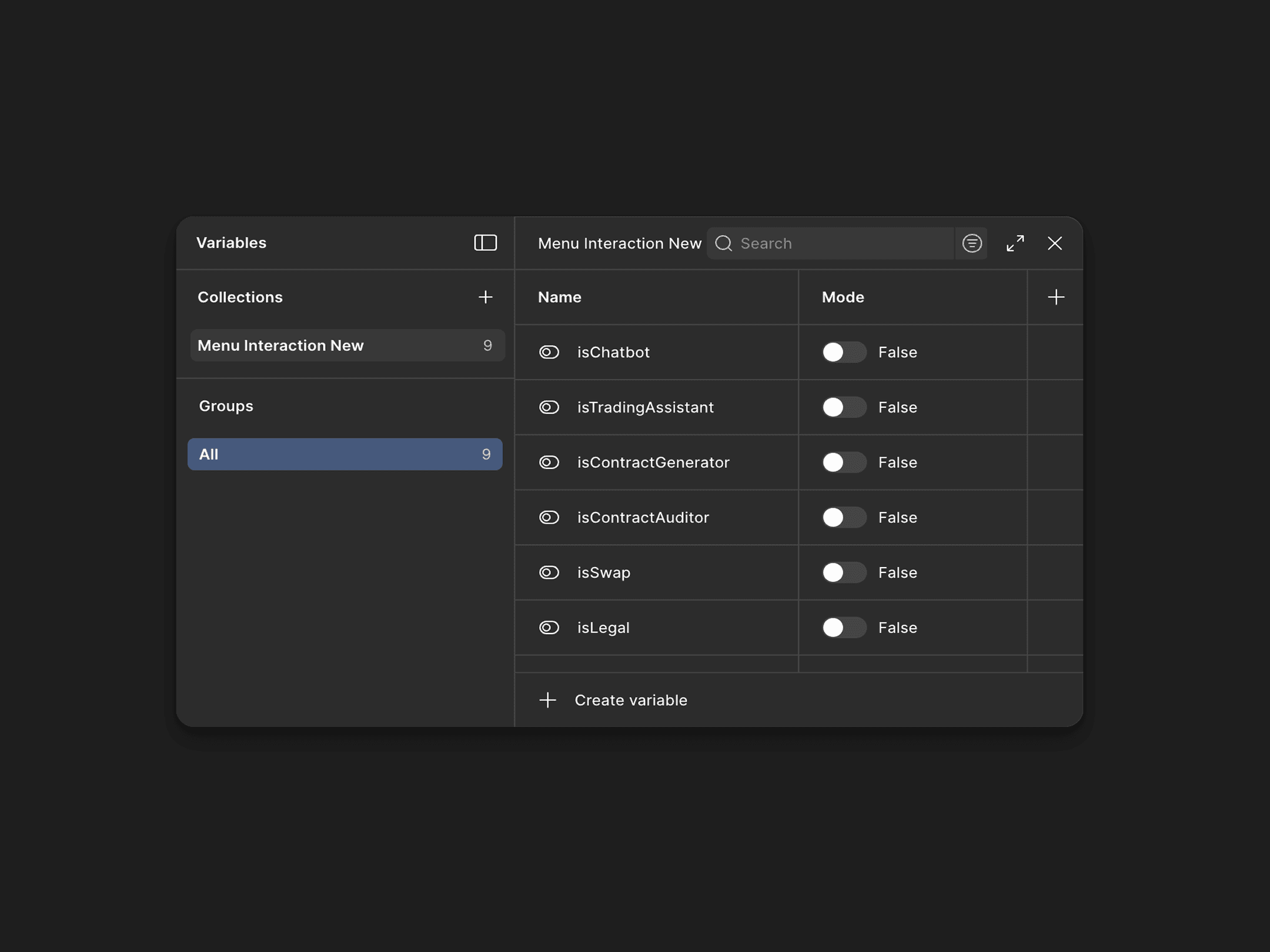
To support smooth and consistent transitions between tools in V2.2, navigation was designed in Figma as a state-based system using variables and conditional logic.
Phase 2: V2 → V2.2
Why V2 had to evolve
After V2, the product entered a new phase where UX, business model, and user behavior started to diverge from the original assumptions.
Three factors drove the transition to V2.2:
Monetization shift: the product was moving from per-tool usage toward a subscription-based model, making rigid tool boundaries less relevant
Usage patterns: some features (especially signals-related) were no longer passive context but active destinations
Complexity management: the growing set of capabilities required a clearer, more compact navigation model
Navigation changes in V2.2
In V2.2, chat became the default entry point to the product, reinforcing AI as the core value.
Navigation was simplified and made expandable:
reducing upfront choices
keeping advanced tools accessible without overwhelming new users
supporting continuous usage instead of single, transactional actions
This aligned the interface with both the new monetization logic and real user behavior.
To support smooth and consistent transitions between tools in V2.2, navigation was designed in Figma as a state-based system using variables and conditional logic.
Phase 1: V1 → V2
From AI Signals to Crypto Alerts
As signals-related features matured, their role changed.
What started in V2 as supporting intelligence evolved into a more complex set of capabilities:
AI Signals
AI Foresight
In V2.2, these were consolidated into Crypto Alerts, a standalone tool with its own flows and states.
This decision acknowledged that:
the feature had become a destination
the right panel was no longer sufficient
deeper interaction required dedicated UX
Importantly, this evolution did not break the chat-first approach — it extended it.
Phase 1: V1 → V2
From AI Signals to Crypto Alerts
As signals-related features matured, their role changed.
What started in V2 as supporting intelligence evolved into a more complex set of capabilities:
AI Signals
AI Foresight
In V2.2, these were consolidated into Crypto Alerts, a standalone tool with its own flows and states.
This decision acknowledged that:
the feature had become a destination
the right panel was no longer sufficient
deeper interaction required dedicated UX
Importantly, this evolution did not break the chat-first approach — it extended it.
Results, impact
Faster time-to-value
By moving to a chat-centered experience, users no longer had to choose a tool upfront. Estimated reduction in time to first meaningful result - up to 30–40% (from tool selection → result).
Lower cognitive load at entry
The default chatbot-first interface replaced a tool-heavy starting point, reducing the number of initial decisions from multiple tool choices to a single intent-based action.
Scalable feature growth without UX fragmentation
New capabilities (expanded AI Trading Assistant, AI Foresight, Crypto Alerts, Smart Contract tools) were added within an existing interaction model, without introducing new navigation models or layouts.
Consolidation of overlapping functionality
AI Signals and AI Foresight were unified under Crypto Alerts, reducing feature duplication and clarifying value for users who monitor markets proactively.
UX aligned with monetization model
The shift toward subscription-based access removed per-tool friction and supported continuous exploration instead of transactional, cost-driven behavior.
Reduced long-term product cost
Clear system rules (intent-driven = chat, context-driven = tools) lowered the risk of future UX debt and simplified onboarding for new designers and developers.
Results, impact
Faster time-to-value
By moving to a chat-centered experience, users no longer had to choose a tool upfront. Estimated reduction in time to first meaningful result - up to 30–40% (from tool selection → result).
Lower cognitive load at entry
The default chatbot-first interface replaced a tool-heavy starting point, reducing the number of initial decisions from multiple tool choices to a single intent-based action.
Scalable feature growth without UX fragmentation
New capabilities (expanded AI Trading Assistant, AI Foresight, Crypto Alerts, Smart Contract tools) were added within an existing interaction model, without introducing new navigation models or layouts.
Consolidation of overlapping functionality
AI Signals and AI Foresight were unified under Crypto Alerts, reducing feature duplication and clarifying value for users who monitor markets proactively.
UX aligned with monetization model
The shift toward subscription-based access removed per-tool friction and supported continuous exploration instead of transactional, cost-driven behavior.
Reduced long-term product cost
Clear system rules (intent-driven = chat, context-driven = tools) lowered the risk of future UX debt and simplified onboarding for new designers and developers.
Other projects
Motorsport
Broadcast
Dataviz
Griiip
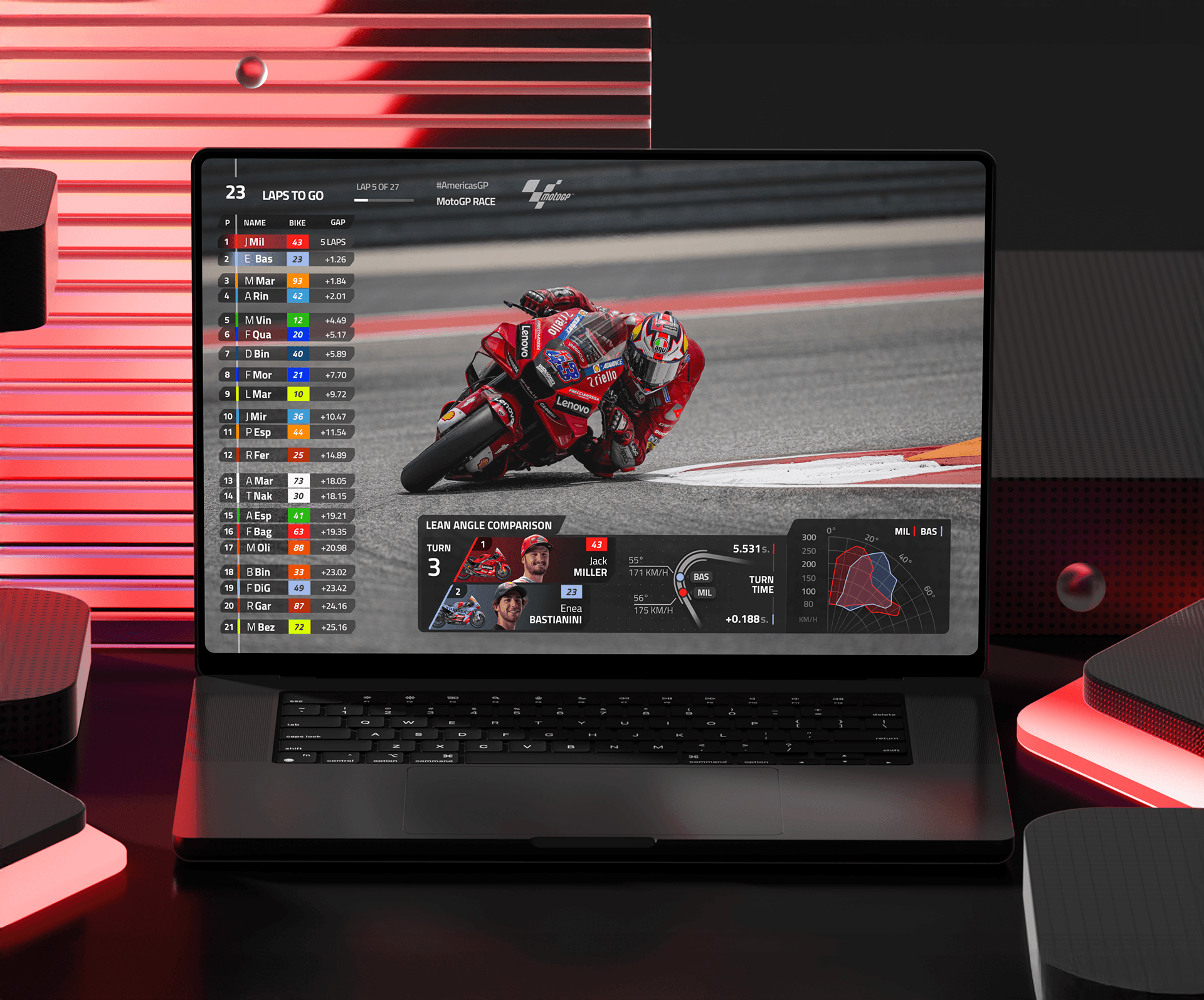
Second Screen web app, Race Graphics for TV, UI systems, presentations & videos
Motorsport
Broadcast
Dataviz
Griiip
Second Screen web app, Race Graphics for TV, UI systems, presentations & videos
Personal finance
Fintech
Normies App
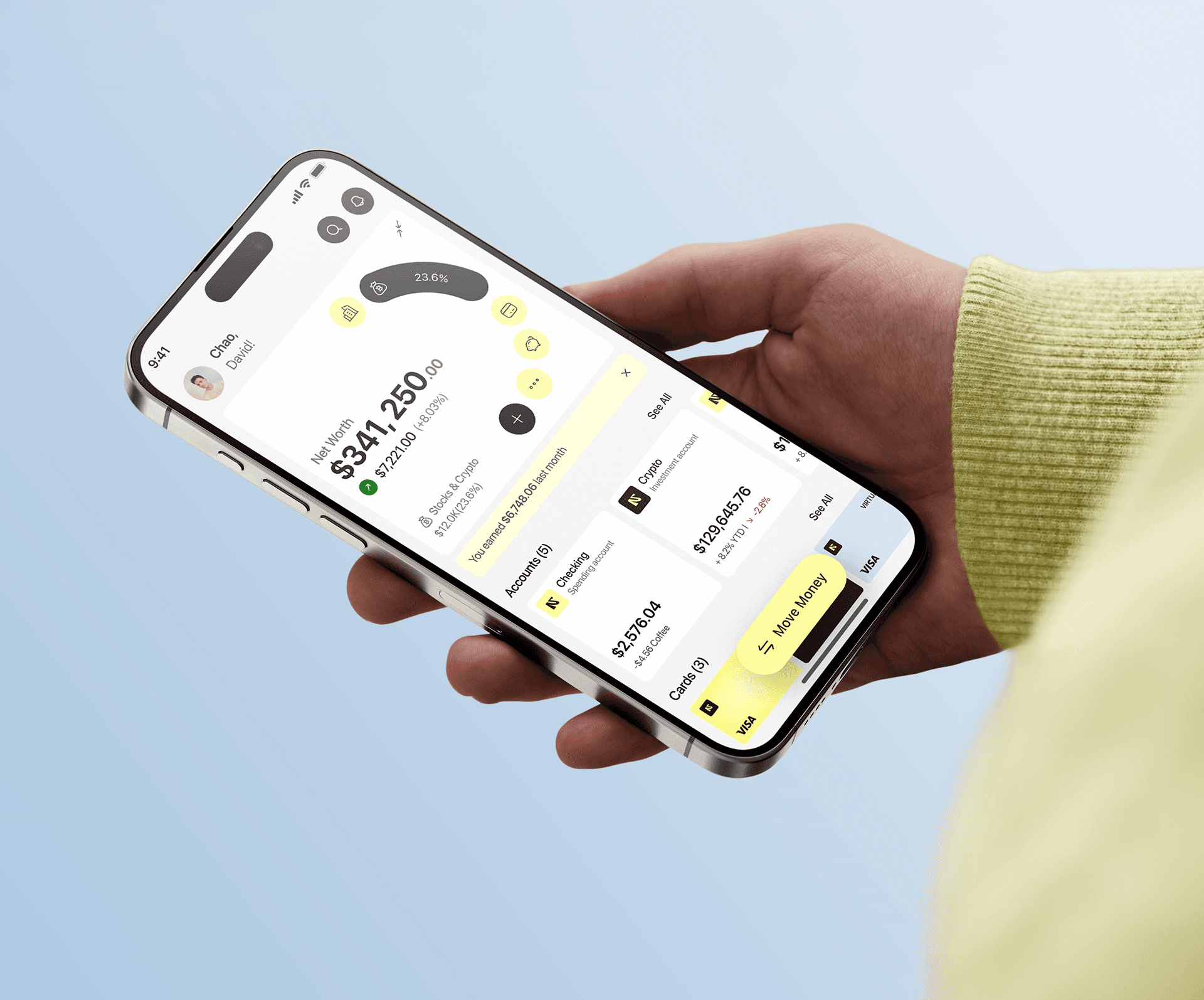
A scalable foundation for a complex financial product, covering money management, investments, assets, automation, and social finance
Personal finance
Fintech
Normies App
A scalable foundation for a complex financial product, covering money management, investments, assets, automation, and social finance